
Meta has introduced Audience Labels for Customer Audiences, making it easier to organise your first-party data and give Meta more context about who your customers are. While it may seem like a small update on the surface, it signals a bigger shift in how Meta wants advertisers to use customer data to improve campaign performance.
As Meta continues to invest heavily in AI and automation, first-party data is becoming more important than ever. Instead of simply uploading a customer list, advertisers can now categorise their audiences based on where people are in the customer journey. This gives Meta a much clearer understanding of who you’re trying to reach and who your most valuable customers are.
For businesses that already rely on Customer Audiences, this is a feature worth paying attention to.
What are Audience Labels?
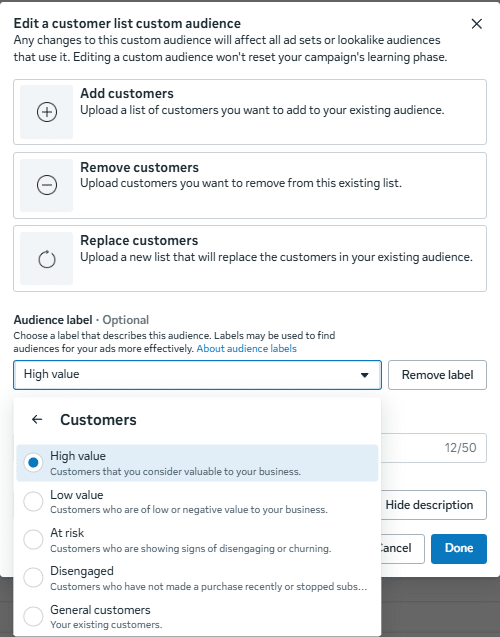
Previously, many advertisers would upload customer lists with fairly generic names like “Customer List” or “Purchasers.” While these audiences still worked, Meta had very little context about what each audience actually represented.
With Audience Labels, you can now categorise audiences such as:
- Existing Customers
- High-Value Customers
- Recent Purchasers
- Qualified Leads
- Cart Abandoners
- Engaged Users
- Unengaged Customers
It makes managing your audiences much cleaner, especially if you’re working with multiple customer segments. More importantly, it gives Meta additional information about who belongs in each audience, helping its AI make smarter optimisation decisions over time.
Why does it matter?
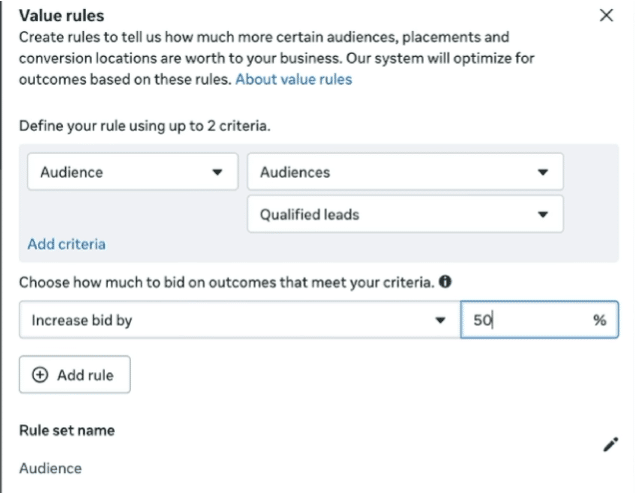
This update works alongside Meta’s new Value Rules feature, which allows advertisers to tell Meta which customer groups are more valuable to their business.
Not every customer is worth the same. Someone who has purchased from your brand five times is likely to be more valuable than someone who visited your website once six months ago. Likewise, a VIP customer with a high average order value is often worth more than a one-time purchaser.
With Value Rules, advertisers can increase bids for customer groups that are likely to drive greater long-term value, while reducing bids for audiences that are less engaged.
For example, you could:
- Increase bids for VIP customers
- Prioritise repeat purchasers
- Focus on high-value shoppers
- Reduce bids for unengaged customers
- Lower spend on lower-value customer groups
Rather than treating every conversion equally, Meta can optimise towards customers who are more likely to become your best customers over time.
A Move Towards Smarter Optimisation
Over the last few years, we’ve seen Meta gradually remove manual controls in favour of AI-driven automation. Features like Advantage+ Shopping Campaigns, Advantage+ Audience and automated creative enhancements are all designed to help advertisers spend less time manually optimising campaigns.
Audience Labels feel like another step in that direction.
Instead of relying purely on pixel data, Meta is encouraging advertisers to provide richer first-party information about their customers. The more context Meta has, the better it can understand who you’re trying to acquire and where your budget should be spent.
This is particularly valuable as privacy changes continue to reduce the amount of third-party data available. First-party data is becoming one of the strongest signals advertisers can give Meta’s algorithm.
What should advertisers do?
If you’re already using Customer Audiences, now is a good time to review how they’re organised.
Rather than having one large customer list, consider separating your audiences into meaningful groups based on customer value or behaviour. For example, you might have separate audiences for repeat purchasers, newsletter subscribers, recent customers, cart abandoners and VIP shoppers.
Should you expect better performance?
It’s important to keep expectations realistic.
Simply adding Audience Labels isn’t going to suddenly double your ROAS or dramatically improve campaign performance overnight. Like many of Meta’s recent updates, this is more about building a stronger foundation for future optimisation than delivering an instant performance boost.
The biggest benefit comes from giving Meta better-quality data to work with. Combined with Value Rules and other AI-powered features, Audience Labels help Meta understand which customers matter most to your business so it can make more informed bidding decisions.
Keeping your audiences organised will also make it easier to take advantage of future Meta features as they continue to roll out.
References
https://www.jonloomer.com/meta-redesigns-audiences-around-labels/?utm_source=chatgpt.com