
Over the past year, Meta has quietly rebuilt how ads are delivered across Facebook and Instagram, and it’s one of the biggest changes we’ve seen since iOS14.
What’s refreshing is that Meta has openly acknowledged something many brands were already experiencing. Creatives that worked well on Instagram wouldn’t always translate on Facebook, learning was siloed across placements, and optimisation wasn’t flowing efficiently across the ecosystem So, Meta rebuilt it from the ground up.
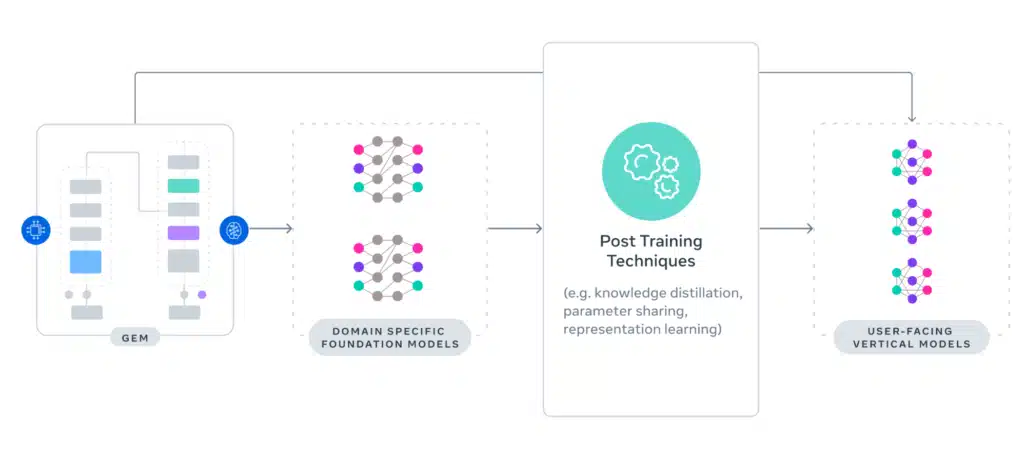
At the centre of this shift are two AI engines: Andromeda and GEM. Together, they’ve transformed Meta from an audience-led platform into a creative-first recommendation engine similar to how TikTok decides what content people see, and this has completely changed what drives growth for fashion brands.
Why Meta Changed Its Ad System
Before Andromeda, Facebook and Instagram were effectively operating on separate ranking systems. This meant ad performance varied widely by placement, and advertisers weren’t benefiting from shared learning across Meta’s platforms. Meta has confirmed that Andromeda was introduced to unify ad delivery across Facebook, Instagram, Reels and Explore, allowing one intelligent system to decide which creative should be shown to each user. The goal was simple: better matching between people and content, and more consistent performance for advertisers. To make that possible, creative became the core signal.
How Meta Ads Work Now
Instead of relying heavily on audiences and interest targeting, Meta now looks at all the creative in your account alongside product data and user behaviour. It analyses imagery, messaging, product type and context in real time, then decides which ad is most relevant for each individual person.
In practice, this means your creative is no longer just the message, it’s part of the targeting itself. This is where Andromeda plays its role.
What is Meta’s Andromeda?
Andromeda acts as Meta’s retrieval engine. Its job is to scan all your ads and pull forward the most relevant ones for each user, regardless of whether they’re browsing Facebook or Instagram.
For fashion brands, this allows Meta to automatically connect different types of creative to different shopper mindsets. Occasionwear content can be served to customers browsing for events and weddings, while everyday wardrobe staples reach repeat buyers looking for versatile pieces. UGC try-on videos tend to reach shoppers closer to purchase, while aspirational editorial imagery is often shown to discovery audiences.
All of this can now happen within a single broad campaign, without manually splitting audiences.
This is why simpler account structures are consistently outperforming complex ones.
What is Meta’s GEM update?
Once Andromeda has pulled the most relevant ads, GEM steps in to predict which creative is most likely to drive a result.
GEM looks at long-term behaviour patterns and real-time signals to rank ads by their likelihood to generate engagement, product views or purchases. Meta then serves the top-performing option for that specific person.
This constant ranking is why certain creatives suddenly scale quickly while others naturally fade. The system is learning in real time which storytelling angles resonate with different types of shoppers.
Meta is no longer just delivering ads — it’s recommending them.
What This Looks Like for Fashion Brands
For luxury fashion and occasionwear brands, this shift means performance no longer comes from one hero image and tightly defined audiences. Instead, brands that perform best typically run a mix of content types — from editorial campaign imagery and real customer UGC to styling reels for different occasions, fabric close-ups and short storytelling videos around craftsmanship or design.
Meta then automatically matches aspirational visuals to discovery shoppers, UGC to conversion-ready users, and styling content to those browsing and saving products.
For premium accessories brands, creative often spans product feature highlights, lifestyle outfit imagery, testimonials and short functional videos showing capacity or wearability. Over time, Meta learns which shoppers respond to design, which respond to practicality and which need social proof — and serves the right message accordingly.
For swimwear and resortwear brands, high-performing accounts usually blend dreamy lifestyle shoots with real customer content, fit and fabric explainers, and styling content showing versatility across beach, pool and holiday settings. Meta then distributes each creative type across different stages of the buying journey automatically.
Why Organic Social Media Content Is Now Directly Driving Better Ad Performance
This is something we’ve seen happening for a while across fashion brands — long before Meta formally spoke about it.
Brands with strong, consistent organic content have almost always found it easier to scale ads. Their creatives land better, performance stabilises faster, and winning formats emerge more quickly.
What’s changed now is that Meta has openly confirmed what many performance teams were already experiencing: organic engagement signals and creative quality are playing a bigger role in how ads are prioritised and delivered.
With Andromeda and GEM analysing creative at a deeper level, content that feels native to the platform — and already resonates with users — is naturally favoured.
When a reel, styling video or behind-the-scenes clip performs well organically, it’s showing Meta exactly how people interact with that type of content. When that same content is then used in paid campaigns, the system can match it more confidently to similar shoppers, and GEM is more likely to rank it higher because it already demonstrates real engagement behaviour.
For fashion brands, this is why UGC, try-ons, outfit styling content and founder-led storytelling are increasingly outperforming overly polished studio shots on their own.
Organic content reflects how customers genuinely connect with the brand — and that authenticity now translates directly into stronger paid performance.
This is also why brands with a consistent organic strategy tend to see better long-term results from Meta ads. They’re constantly feeding the platform fresh, relevant creative that mirrors real customer interests, helping the algorithm learn faster and optimise more effectively.
The takeaway is simple: organic is no longer just about brand presence or community building. A solid organic strategy is now a performance lever.
And with Meta now openly acknowledging the link between organic engagement and ad delivery, fashion brands that invest in content across both paid and organic will be in a far stronger position going forward.
What Fashion Brands Should Do Now
The biggest shift for brands is moving away from thinking in single ads and towards building creative ecosystems.
Instead of endless small variations of the same image, the focus should be on distinct concepts — lifestyle, product focus, UGC, storytelling and occasion-led content.
At the same time, account structures should be simplified so Meta’s AI can learn properly and optimise across placements.
To put this into action:
- Build a creative bank each month that includes a variety of content – lifestyle content, UGC, product close-ups, styling videos and brand storytelling
- Run broader audiences and fewer campaigns to give Meta more data to optimise with
- Regularly refresh creative rather than constantly tweaking targeting
- Optimise your product feed with clear titles, strong imagery and accurate pricing
- Repurpose your best organic content directly into paid campaigns
- Focus testing on creative concepts, not just headlines
Perhaps most importantly, let go of old targeting habits. Interest stacking, micro-audiences and heavy manual control are becoming less effective as Meta’s AI improves.
Looking to improve performance for your META Ads? Get in touch.