AI-generated images have exploded in fashion over the last year. What started as fun moodboards on Instagram has now become a serious tool for brands — from quick concept visuals, to lookbooks, to even full campaign films.
If you’ve seen the buzz but aren’t sure what’s worth paying attention to, here’s a simple guide to the main platforms and how they’re being used in fashion right now.
Why fashion is turning to AI
-
Speed – you can create a whole campaign concept in hours instead of weeks.
-
Cost savings – test ideas before committing to a shoot.
-
Flexibility – localise imagery for different markets, seasons or product drops without flying a team around the world.
-
Creativity – experiment with styling, lighting and set design without limits.
The main players (and how they differ)
Midjourney – Think of this as your go-to for beautiful still images. It’s great for editorial-style lookbooks and moodboards. It has a very “fashion” feel — polished, artistic and often ready to drop straight into a deck.
FLUX – This is more open and customisable. It’s a bit less “instant magic” than Midjourney, but you can train and tweak it to be consistent with your brand’s look. Ideal if you want reliable catalogue-style product shots or ongoing campaigns where everything needs to match.
Veo – Google’s video tool. If you want moving imagery — think campaign trailers or digital runway films — this is where it shines. You can even pull stills from the video to use on your website or email.
Kling – Another video tool, but this one is especially good with motion. Clothes look like they’re actually moving — fabric sways, models walk naturally. Perfect for showing the drape and feel of a piece.
FAL.ai – Less about creating one style, more about access. It’s like a platform where you can run lots of these different tools (Veo, Kling, FLUX) in one place, without needing heavy tech setup. Useful if you want to scale or manage lots of content quickly.
Quick guide: what to go for
-
Want moodboards, lookbooks or creative campaigns? → Start with Midjourney.
-
Want consistent product shots or repeatable brand visuals? → Go for FLUX.
-
Want moving campaign films or trailers? → Try Veo.
-
Want natural fabric motion, like a digital runway? → Look at Kling.
-
Want a simple platform that handles all of this at scale? → Use FAL.ai.
Where to begin as a brand owner
You don’t need to overhaul your creative process overnight. A simple starting point could be:
-
Use Midjourney to create a seasonal concept board.
-
Test a few Veo or Kling clips as teasers on Instagram or TikTok.
-
When you’re ready, explore FLUX or FAL.ai for catalogue or campaign consistency.
The key is to see AI as a complement, not a replacement it can make your creative process faster, more flexible, and more experimental.
Key Features For Fashion Advertisers
-
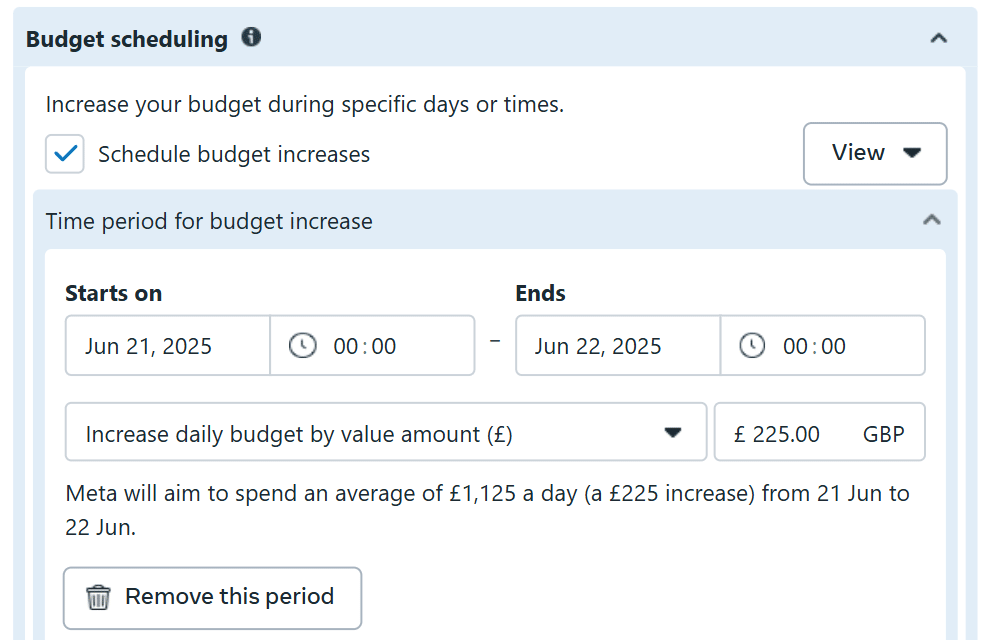
Daily Budget Only – Available for campaigns using a daily budget.
-
Up to 50 High-Demand Periods – Perfect for planning seasonal campaigns months in advance.
-
Budget Increase Cap – Can’t exceed 8x your daily budget in high-demand periods.
-
Minimum 3-Hour Blocks – Ensures meaningful coverage during peaks.
Maximise performance during peak shopping times by reaching more shoppers when they’re most active and ready to purchase. Gain greater control over your campaign strategy by pre-planning spend around key dates and events, and use your ad budget more efficiently by avoiding overspending in quieter periods while focusing investment where it delivers the highest conversions. With automated scheduling, you can boost results without constant manual adjustments — a major advantage for global campaigns running across multiple time zones.
How Fashion Brands Can Use Budget Scheduling Effectively
-
Map your seasonal calendar – Include sales events, collection launches, influencer posts, and PR moments.
-
Analyse past performance data – Identify timeframes when your audience is most active.
-
Plan high-demand periods in advance – Schedule boosts around these dates to capture peak intent.
-
Test and refine – Adjust based on real-time performance for continuous improvement.
Why This Matters for Fashion Brands
The fashion industry thrives on urgency and trends — from “must-have” pieces to viral looks. By using Meta’s Budget Scheduling, you can ensure your ads appear when your audience is most engaged, helping you capitalise on demand without inflating your monthly budget unnecessarily.
By planning budget increases strategically, you’re not just spending more — you’re spending smarter.